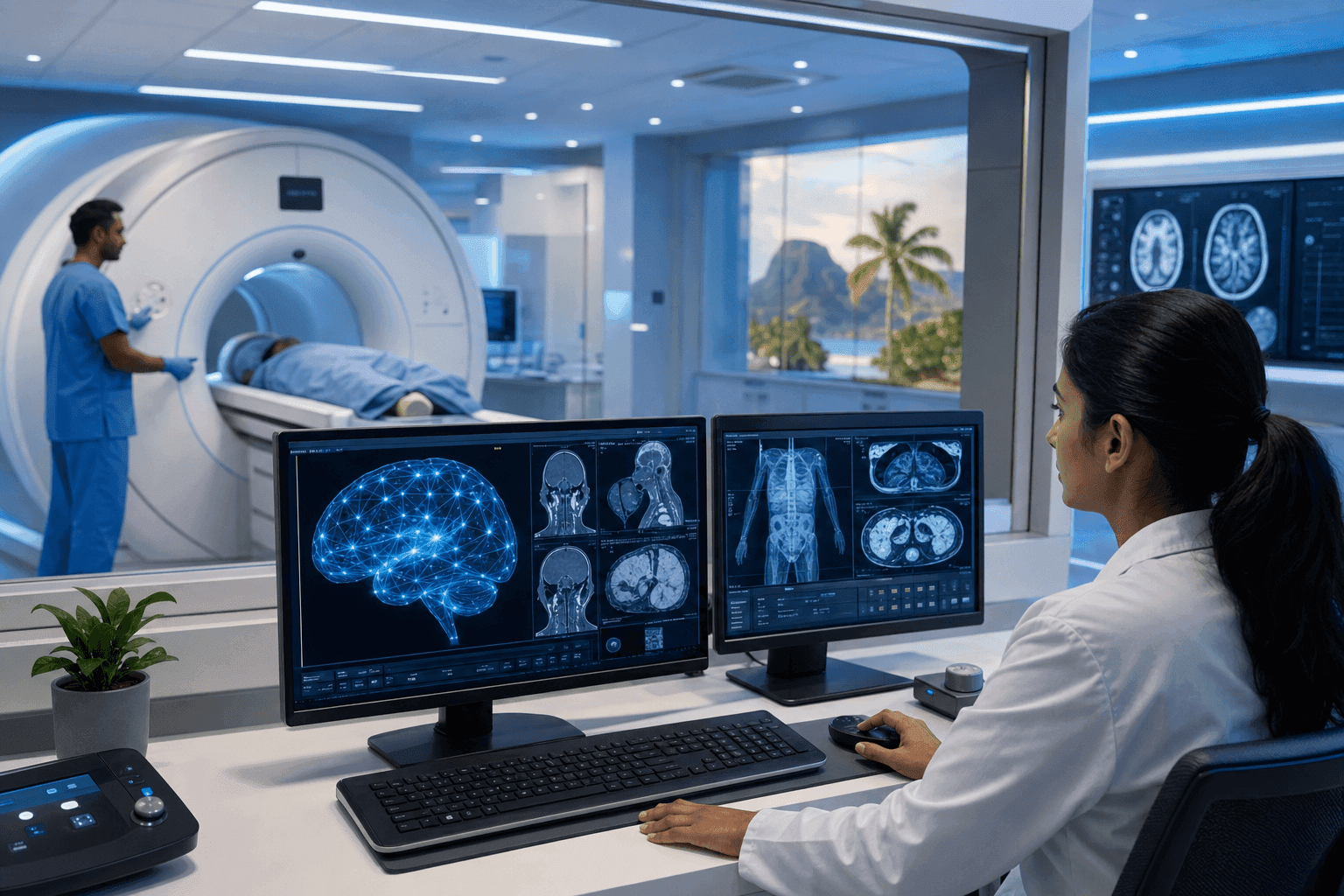
A new set of eyes in the reading room
Artificial intelligence, or AI, has become one of the most talked about developments in medicine, and radiology is at the very front of that change. Medical imaging produces enormous amounts of visual data, and computers are becoming remarkably good at helping to analyse it. For patients in Mauritius this quietly means faster answers, fewer missed findings, and radiologists who have more time for the parts of care that need a human touch.
It is important to be clear from the start. AI in radiology is a tool that supports the radiologist, not a replacement for one. The doctor remains responsible for the final report and the decisions that follow.
How AI actually helps
Modern AI systems learn by studying very large numbers of images that have already been reviewed by experts. Over time they learn to recognise patterns, such as the appearance of a particular kind of lung nodule or the early signs of a stroke on a brain scan. Once trained, the software can flag areas that deserve a closer look.
There are several practical ways this is used today.
AI can act as a second reader, quietly checking images and highlighting anything the radiologist might want to examine again. This safety net helps reduce the chance of a subtle finding being overlooked at the end of a long day.
AI can help sort and prioritise the work list. When a scan shows signs of an urgent problem such as bleeding in the brain, the software can move that case to the top of the queue so a radiologist sees it sooner. In an emergency, saving minutes can save lives.
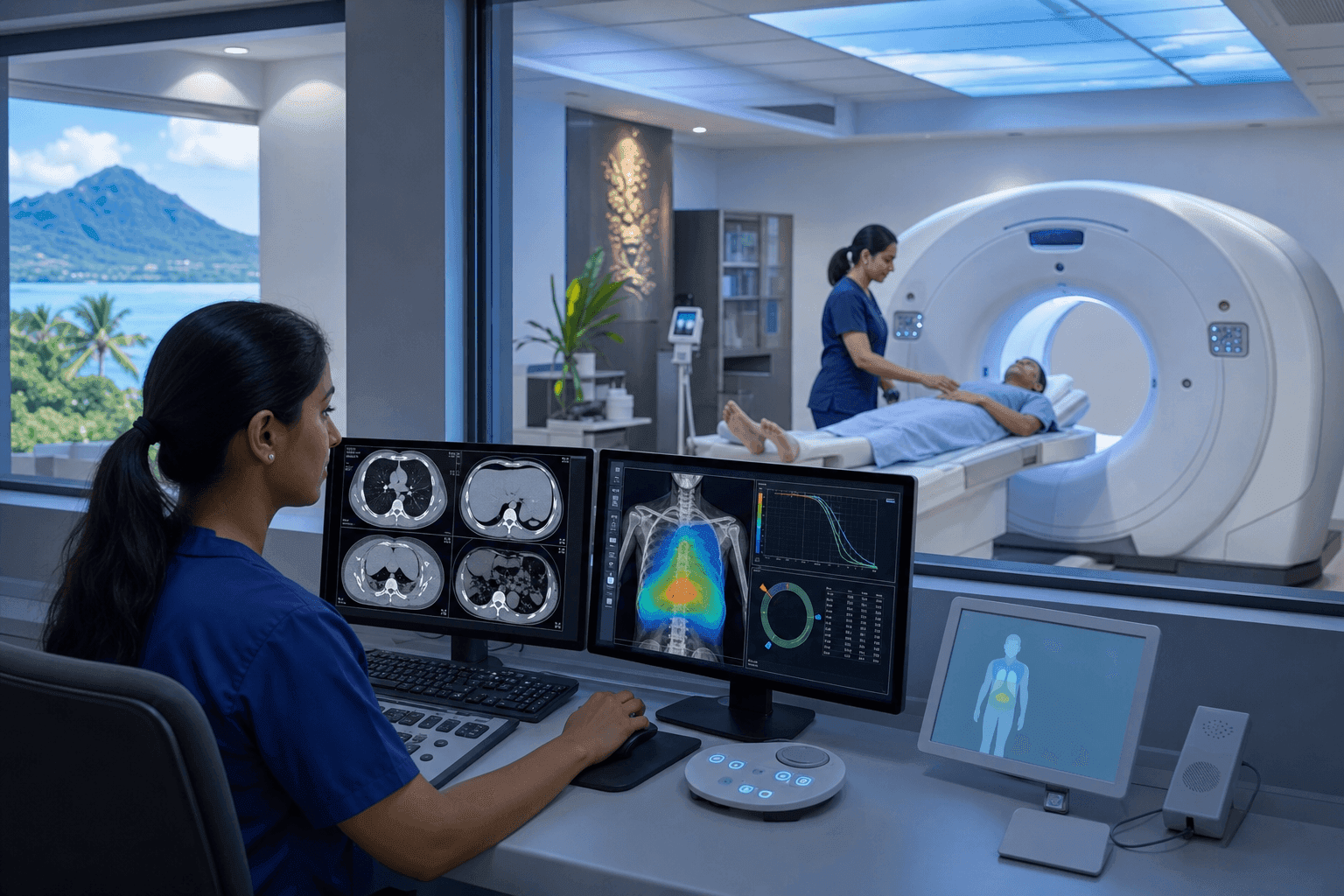
AI can also handle measurement and routine tasks. Counting and measuring nodules, tracking whether something has grown between two scans, or outlining an organ can be done quickly and consistently by software, freeing the radiologist to focus on interpretation.
Better images, lower dose
AI is not only about spotting findings. It is also improving the images themselves. Clever software can reduce the grainy noise in a scan, which means a clear picture can sometimes be produced using a lower radiation dose on CT or a shorter, more comfortable MRI. For patients this can mean less time in the scanner and, where radiation is involved, less exposure.
Faster answers for patients
Because AI can work in the background at any hour, it helps imaging departments run more smoothly. Urgent cases are surfaced quickly, routine measurements are ready before the radiologist opens the study, and reports can be prepared more efficiently. The result many patients notice is simply a shorter wait between the scan and the answer.
The limits and the safeguards
AI is powerful, but it is not perfect. A system is only as good as the images it learned from, and it can be less reliable when it meets a situation it has not seen before. It can occasionally flag something that turns out to be harmless, or miss something unusual. This is exactly why a trained radiologist reviews every result. The human doctor brings judgement, knowledge of your history, and an understanding of the whole person that software does not have.
Good practice also means these tools are tested carefully before use, monitored over time, and used with respect for patient privacy. Reputable imaging providers introduce AI thoughtfully, as an aid to their specialists rather than a shortcut around them.
What it means for Mauritius
For a country the size of Mauritius, where specialist time is precious, AI offers a genuine benefit. It can help a smaller team read a large volume of scans safely, support less experienced staff with a reliable second opinion, and connect local departments to modern tools that were once available only in the largest overseas centres. Used well, it helps stretch expertise further without lowering standards.
The takeaway
AI is changing radiology for the better by acting as a tireless second set of eyes, prioritising urgent cases, sharpening images, and taking routine measurement off the radiologist's plate. It does not replace the doctor, it supports one. For patients in Mauritius the practical effects are faster answers, potentially lower doses, and the reassurance of an extra safety check on their scans. As the technology matures, its quiet job will be to help skilled people do their work even better.
Clear imaging is the first step to an accurate diagnosis. Explore the wider Medtech health ecosystem.