A sensible look at a common worry
It is natural to feel a little uneasy when a doctor recommends a scan that involves radiation. The word itself sounds alarming. The reassuring truth is that medical imaging in Mauritius is carefully controlled, that many scans use no radiation at all, and that when radiation is used the amount is small and always weighed against a clear benefit to your health. Understanding the facts makes it much easier to approach any scan with confidence.
Which scans use radiation and which do not
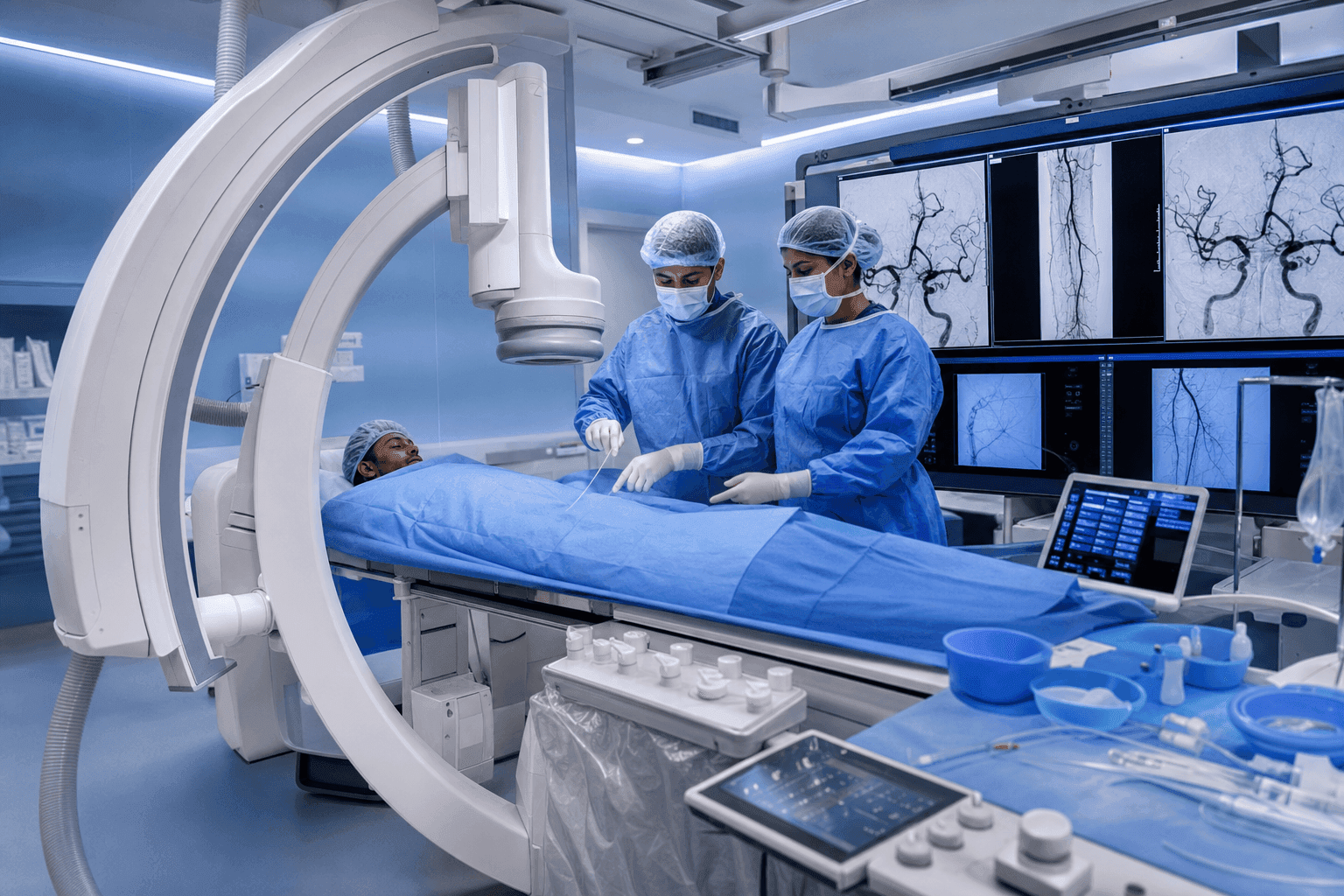
Not all imaging is the same. X-rays and CT scans use a type of energy called ionising radiation. Nuclear medicine scans use a small amount of a radioactive tracer. These are the tests where dose is discussed.
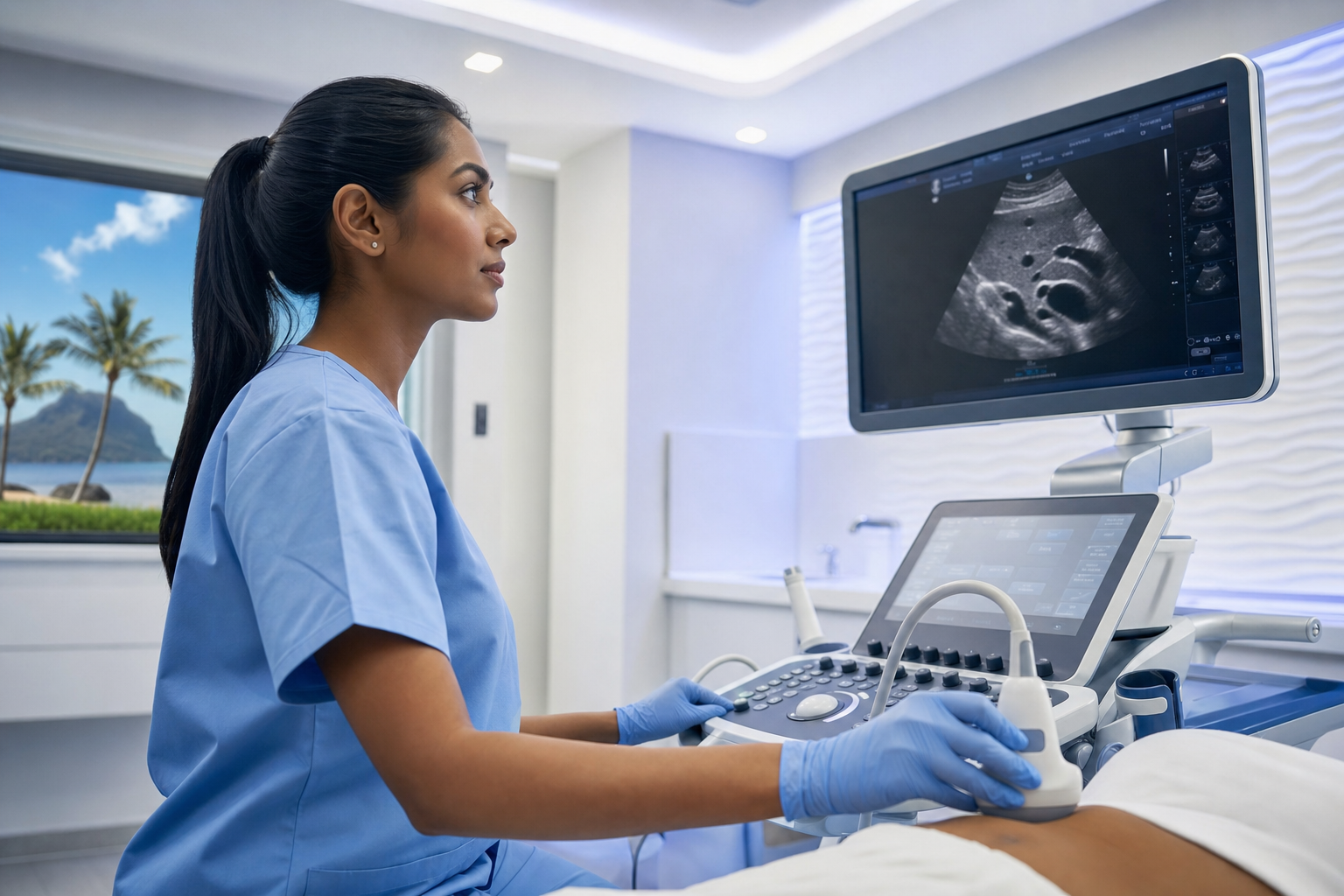
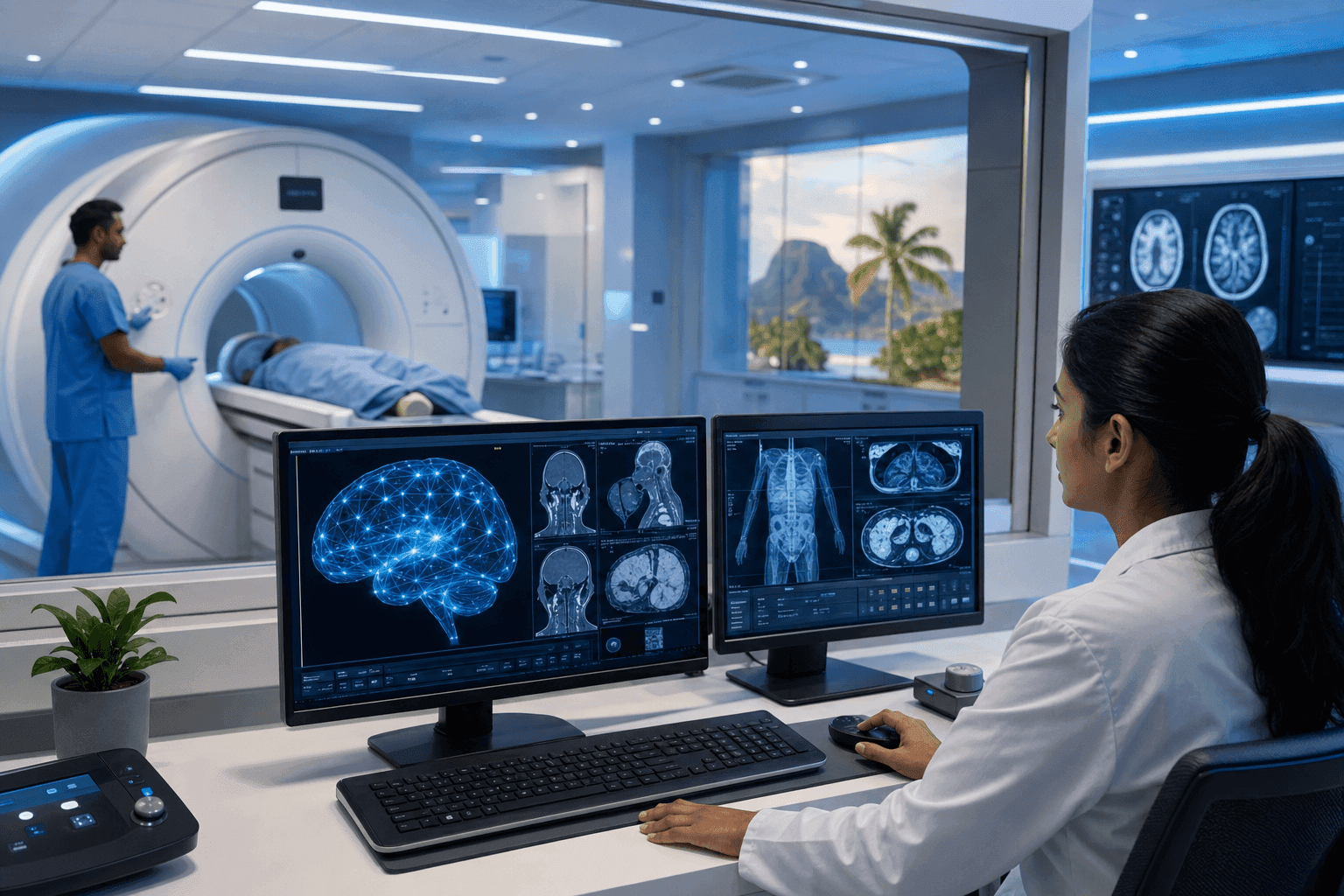
Two very common scans use no ionising radiation at all. Ultrasound uses sound waves, and MRI uses magnets and radio waves. This is one reason these tests are often preferred for children, during pregnancy, and when a study may need to be repeated many times. Knowing which category your scan falls into removes a lot of unnecessary worry.
Putting the dose in perspective
We are all exposed to a low level of natural background radiation every day. It comes from the ground, from building materials, from the food we eat, and from the sky, and it rises slightly when we fly. Our bodies are used to it.
Medical doses are usually described in comparison to this everyday background. A single chest X-ray gives a dose roughly equal to a few days of ordinary background radiation, a genuinely tiny amount. A CT scan gives more, often comparable to a number of months or a couple of years of background exposure depending on the part of the body examined. These amounts are still small, and importantly they are only ever given when the information gained is expected to help your care in a meaningful way.
The principle behind every scan
Radiology teams work to a simple and powerful principle, often summed up as keeping doses as low as reasonably achievable. In practice this means several things. A scan is only done when it is genuinely needed to answer a question about your health. The machine is set to use the lowest dose that will still produce a useful image. The beam is focused tightly on the area of interest, and the rest of the body is protected. Modern equipment and, increasingly, smart software help produce clear images at ever lower doses.
Every request is also a judgement. Your doctor weighs the very small risk of the radiation against the often much larger benefit of finding or ruling out a serious problem. For most people, most of the time, that balance falls clearly in favour of having the scan.
Special care for some patients
Extra caution is taken with certain groups. Children are more sensitive to radiation and have their whole lives ahead of them, so scans for children use specially reduced settings, and radiation tests are avoided where a safe alternative exists.
Pregnancy calls for particular care, especially for the abdomen. Always tell the radiographer if you are or might be pregnant. Often an ultrasound or MRI can answer the question without any radiation, and where an X-ray or CT is truly necessary the team takes every step to protect the baby.
How you can play your part
You can help keep your own exposure sensible. Keep a simple record of scans you have had, so tests are not needlessly repeated. If a scan is suggested, it is perfectly reasonable to ask why it is needed and whether a test without radiation, such as ultrasound or MRI, would answer the question just as well. Bring any previous images or discs to appointments, as an old scan for comparison can sometimes avoid a new one. And always share whether you are pregnant.
The takeaway
Medical imaging is one of the most valuable tools in modern healthcare, and it is used safely and thoughtfully in Mauritius. Many scans use no radiation at all, and those that do use small, carefully controlled doses given only when the benefit is clear. Radiology teams work constantly to keep exposure as low as possible while still getting the answers your doctor needs. If you ever have questions about the safety of a scan, ask the team, a short and honest conversation is the best way to trade worry for confidence.
Clear imaging is the first step to an accurate diagnosis. Explore the wider Medtech health ecosystem.